
Modern anti-cheat systems are good at finding familiar code inside a game or operating system, but external game tools change the contest. Some devices alter controller input, while others process information away from the gaming PC.
That separation gives security software fewer files, processes and memory changes to inspect. It does not make external cheats invisible or safe. It means detection must shift from searching for a known program to examining hardware integrity, player input and in-match behavior.
For developers, the difficult part is identifying manipulation without punishing a highly skilled player or blocking legitimate accessibility equipment.
External tools leave fewer traces on the gaming PC

Traditional anti-cheat software can compare files, protect game memory and watch processes that interact with the client. An external tool may sit outside those usual checkpoints.
Direct memory access hardware can read information through a device connection, while input adapters can make automated actions resemble ordinary controller signals.
Camera-based or video-processing systems may analyze what appears on screen without touching game memory at all.
- There may be no suspicious executable inside the game process.
- A configurable device may not keep one reliable signature.
- Detection can depend on patterns collected across several matches.
This challenge is especially visible in competitive shooters such as Valorant, where accuracy and situational awareness shape every round. To see how openly external cheats and mod menus are marketed across major games, visit thegamevault.games.
Each detection method covers only part of the problem

No single anti-cheat layer can reliably identify every external game tool. Client software sees the local machine, server systems see actions sent to the game, and investigators see the wider context. Each view contains useful evidence but also blind spots.
|
External tool |
Main detection approach |
Core limit |
|
DMA hardware |
System integrity and device protections |
Hardware and firmware vary |
|
Input adapter |
Timing and consistency analysis |
Signals can resemble human input |
|
Screen-analysis tool |
Replay and behavior review |
No direct game-memory change |
That is why a suspicious result usually becomes one signal rather than automatic proof. A fast snap, excellent recoil control or unusual awareness can occur legitimately.
Reliable enforcement needs corroborating evidence and carefully tested thresholds. The boundaries also overlap as tools evolve.
Anti-cheat protection is becoming more layered

Developers are responding by combining operating-system security with server-side analytics. In June 2026, Riot explained that its optional Vanguard On-Demand mode depends on Windows 11 security features including Secure Boot, TPM 2.0, virtualization-based security and IOMMU protection. These checks help establish whether the PC started and remained in a trusted state.
Important fact: Anti-cheat can look for impossible consistency even when it cannot identify the exact device producing it.
Activision described that approach directly in its February 2026 RICOCHET update. Its system analyzes input timing, consistency and response patterns instead of relying only on the identity of a connected device. This makes changing a device configuration less useful, although Activision also says the work is ongoing rather than a one-time solution.
The contest cannot be solved with one scan
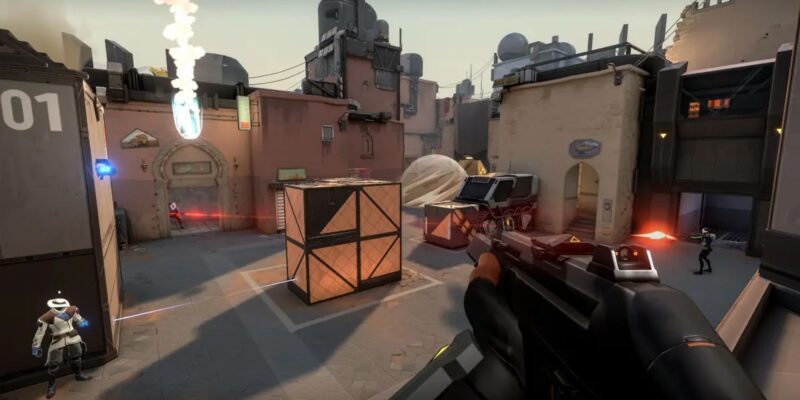
External game tools are difficult to detect because they deliberately move activity beyond the area an anti-cheat client can observe most clearly.
The practical response is defense in depth: secure the operating system, limit untrusted hardware access, inspect server data, review replays and investigate accounts over time.
Players should keep Windows, motherboard firmware and game security components current, and avoid devices or software that promise automated aim, recoil control or hidden information.
A tool being sold publicly does not mean a publisher permits it, and using one can still lead to an account or hardware ban.
Frequently asked questions
[su_accordion]
[su_spoiler title=”1. Are single-player mods the same as cheats?” style=”fancy”]
Not automatically. Publishers often permit some offline modifications but prohibit tools that affect online competition, so the game’s current terms remain decisive.
[/su_spoiler]
[su_spoiler title=”2. Can external game tools affect console matches?” style=”fancy”]
Yes. Input-modifying hardware can operate on consoles as well as PCs, although detection methods and enforcement rules differ between games.
[/su_spoiler]
[su_spoiler title=”3. Does reinstalling a game remove an anti-cheat ban?” style=”fancy”]
Normally not. Enforcement is generally tied to an account and may also include hardware identifiers, so reinstalling local files does not reverse the publisher’s decision.
[/su_spoiler]
[su_spoiler title=”4. Does cloud gaming eliminate external cheating?” style=”fancy”]
No. It restricts direct access to the game machine, but manipulated input and screen-based analysis can remain possible.
[/su_spoiler]
[/su_accordion]